
Female Health · Science Hero Editorial
Could Menstrual Blood Help Detect Endometriosis? What the Research Suggests
Researchers are testing whether menstrual blood could support earlier endometriosis detection. Here’s what the latest diagnostic research actually suggests.
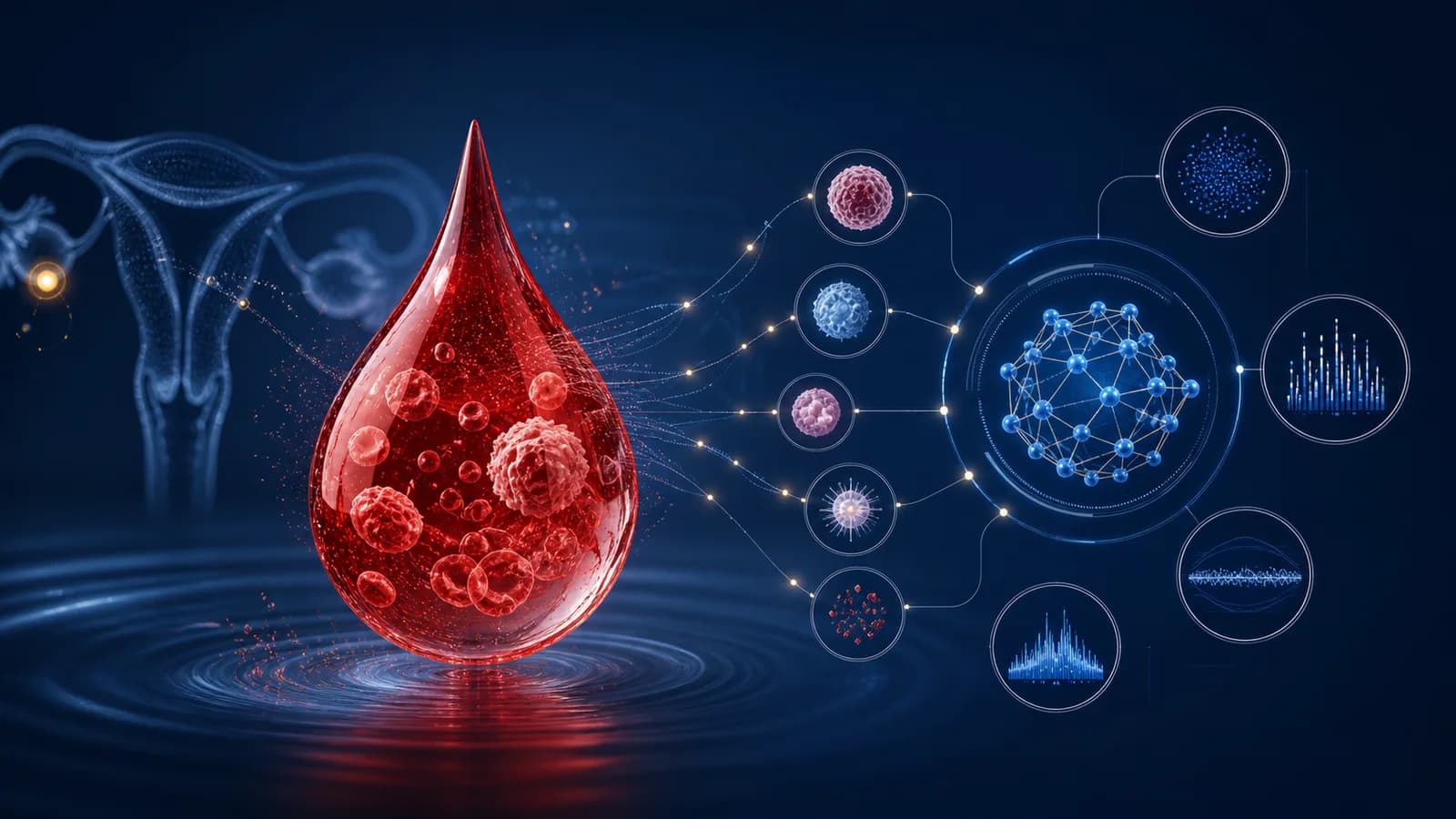
Endometriosis is common, painful, and often slow to diagnose.
That combination creates one of the biggest frustrations in female health: a condition can disrupt daily life for years before clear answers arrive. Part of the problem is structural. Endometriosis is biologically complex, symptoms vary widely, and no single easy test has fully solved the diagnostic challenge.
That is why researchers keep looking for better tools.
One of the more interesting ideas now gaining attention is this: could menstrual blood help detect endometriosis?
The question matters because menstrual blood is non-invasive to collect, comes directly from the reproductive tract, and may carry information about the uterine and inflammatory environment that standard testing can miss.
Why this matters
The future impact here may be larger than many people realize.
When most people hear about menstrual blood research, they think first about stem cells and regenerative medicine. But diagnostics may be closer to real-world impact. A diagnostic pathway does not need to prove that cells repair tissue. It needs to show that a sample can reliably reveal useful disease-related patterns.
If menstrual blood can do that, it could become scientifically and clinically important even if cell-based therapies take much longer to mature.
Why endometriosis is hard to diagnose
Endometriosis involves endometrial-like tissue growing outside the uterus. It can be associated with pain, inflammation, fertility problems and a wide range of symptoms that do not always look the same from one person to the next.
That variability makes diagnosis difficult.
Imaging can help in some cases, but not all. Laparoscopy has historically played a major role, but it is invasive. So researchers have long wanted more accessible diagnostic tools — ideally ones that are non-invasive and biologically informative.
This is where menstrual blood becomes an attractive sample.
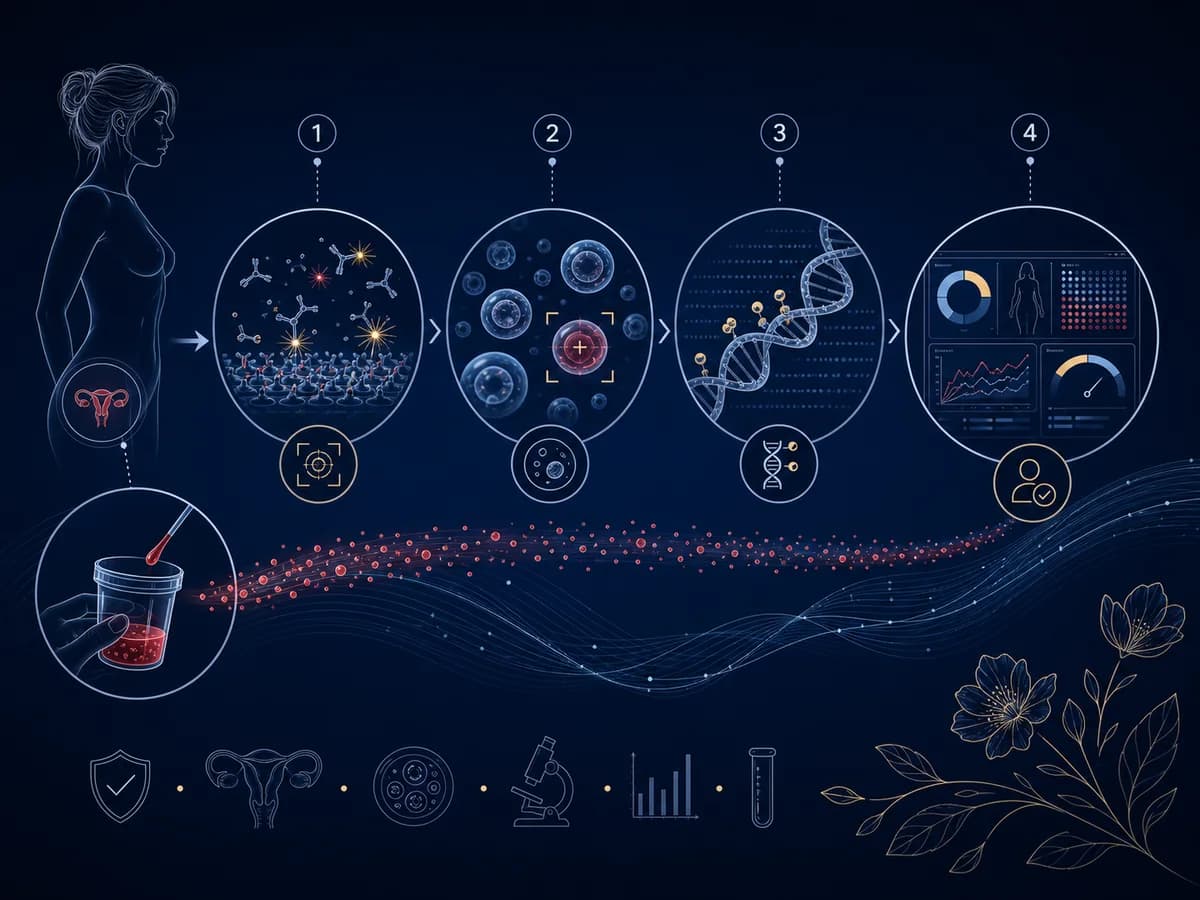
Why menstrual blood makes sense as a diagnostic sample
Menstrual blood is not just a fluid. It is a recurring, endometrial-linked sample that may contain cells, inflammatory signals, nucleic acids and epigenetic information connected to reproductive disease.
That gives it a strategic advantage.
Instead of trying to infer everything from peripheral blood, researchers can study a sample that is much closer to the tissue environment involved in the disease itself.
In other words, menstrual blood may act as a kind of uterine liquid biopsy.
That phrase should be used carefully. It does not mean the problem is solved. But it explains why the field is moving in this direction.
The research is getting more serious
Two recent lines of work help explain why this topic now deserves attention.
The first is a 2025 paper by Wang and colleagues, which developed a non-invasive menstrual blood-based diagnostic platform for endometriosis using digital droplet enzyme-linked immunosorbent assay and single-cell RNA sequencing.
The second is a 2026 paper by Tiniakou and colleagues in Communications Medicine, which used whole-genome DNA methylation profiling of menstrual stem/stromal cells from women with and without endometriosis.
These studies matter because they move the field from vague speculation toward defined molecular signatures and measurable diagnostic performance.
What the research actually shows
What We Know
Menstrual blood can be analyzed in a biologically meaningful way for endometriosis-related research.
Researchers have already used menstrual blood for inflammatory marker analysis, single-cell profiling and methylation-based biomarker work.
That means the sample is scientifically usable, and not merely an interesting idea.
What Looks Promising
The most promising direction is biomarker discovery.
In the 2025 Wang et al. study, researchers combined highly sensitive cytokine detection with single-cell RNA sequencing to build a menstrual blood-based diagnostic approach. The work supports the idea that menstrual samples may capture disease-relevant inflammatory and cellular patterns.
In the 2026 Tiniakou et al. study, researchers identified differentially methylated regions in menstrual stem/stromal cells that distinguished endometriosis cases from controls. In that cohort, the machine learning models achieved encouraging specificity and sensitivity.
This is not trivial. It suggests menstrual blood may carry a reproducible epigenetic signal linked to disease biology.
What We Still Don’t Know
We do not yet know whether these findings will generalize across large, diverse real-world populations.
That is the key next step.
Diagnostic research often looks promising in early cohorts and then becomes harder when tested more broadly. External validation, reproducibility, assay standardization, and clinical utility all matter.
So while the results are promising, it would be premature to describe menstrual blood as an established endometriosis test.
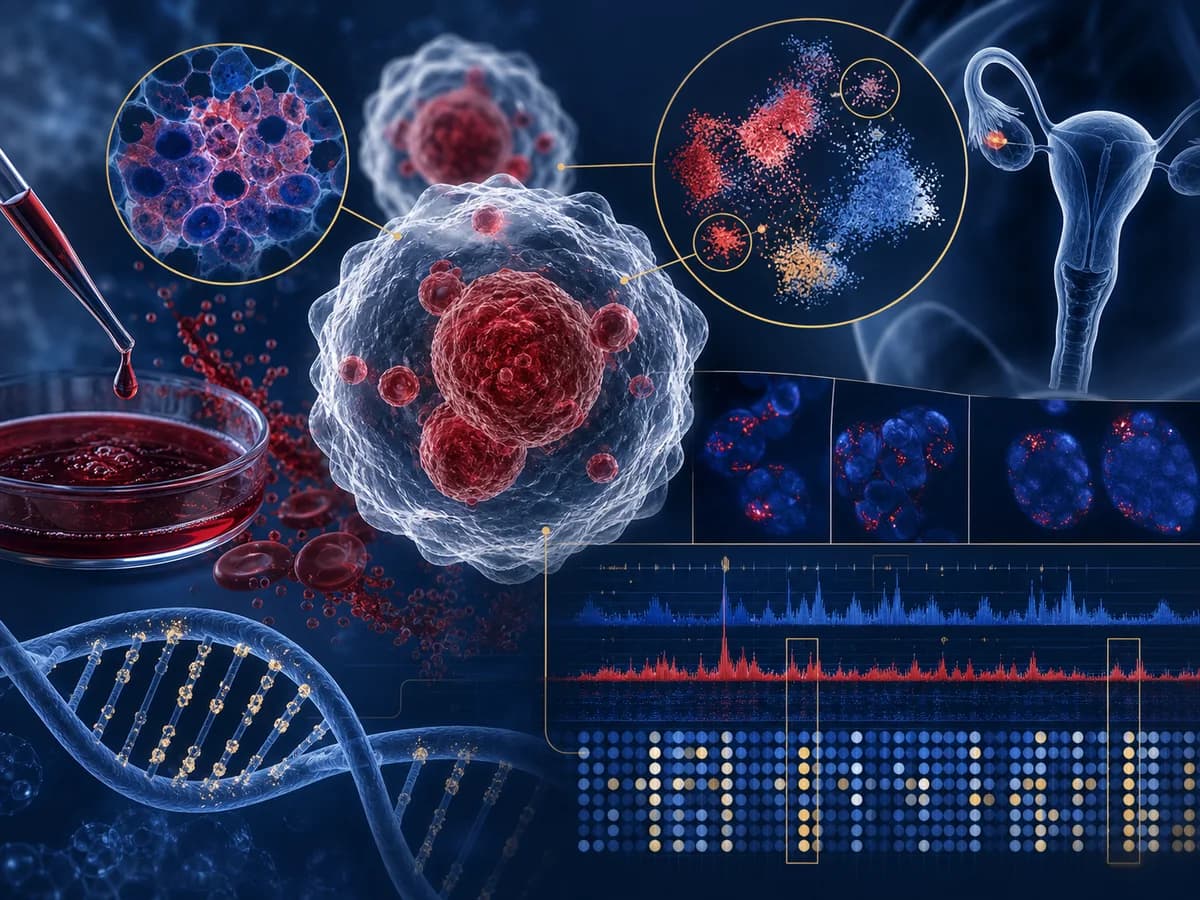
One study or example worth knowing
If one study captures where the field is heading, it may be the 2026 Tiniakou et al. paper.
The researchers analyzed menstrual blood-derived stem/stromal cells from women with and without endometriosis and looked at whole-genome DNA methylation patterns. They identified disease-associated methylation signatures that separated the groups in their study cohort.
Why is that important?
Because it points to something bigger than one biomarker. It suggests menstrual blood may contain informational patterns connected to endometriosis biology itself.
The limitation is just as important: the study was relatively small, and promising biomarker signatures must be validated independently before they can become clinically trustworthy.
Why this may matter more than people think
Diagnostic impact can sometimes arrive earlier than therapeutic impact.
A treatment has to work safely and reproducibly in the body. A diagnostic test has to classify or detect reliably enough to add clinical value.
That is still a high bar — but it is a different bar.
And in the menstrual blood field, diagnostics may be one of the clearest places where the research connects to real-world need. Endometriosis is exactly the kind of condition where a better non-invasive sample could matter.
If future studies confirm these findings, menstrual blood might help shorten diagnostic uncertainty, support disease stratification, or improve how researchers study reproductive health more broadly.
That does not mean a clinically established test exists today.
But it does mean the direction is worth watching closely.
The balanced conclusion
Could menstrual blood help detect endometriosis?
The best answer today is: possibly, and the research is getting stronger — but it is not clinically settled yet.
Scientists now have early evidence that menstrual blood may contain inflammatory, cellular and epigenetic patterns linked to endometriosis. That makes it a promising non-invasive diagnostic research platform.
What comes next is crucial: larger validation studies, stronger reproducibility, and proof that these methods add real value in clinical settings.
This is exactly where good science should be: promising enough to deserve attention, careful enough to resist overstatement.
Research Summary
Could menstrual blood help detect endometriosis?
Possibly. Early studies suggest menstrual blood may contain biomarker patterns linked to endometriosis.
Why is menstrual blood useful for this question?
Because it is non-invasive to collect and comes directly from tissue connected to the reproductive tract and endometrium.
What kinds of signals are researchers studying?
Inflammatory markers, cellular patterns, single-cell data and DNA methylation signatures.
Is there already a proven clinical menstrual blood test for endometriosis?
No. The research is promising, but large validation and clinical implementation are still needed.
What study is especially important here?
Recent work by Wang et al. in 2025 and Tiniakou et al. in 2026 helped move the field toward defined molecular diagnostic approaches.
What remains unknown?
External validation, assay reproducibility, real-world performance and clinical utility across broader populations.