
Female Health · Science Hero Editorial
What Is Menstrual Blood Made Of? Why Scientists Are Taking a Closer Look
Menstrual blood is more than blood alone. Learn what it contains, why scientists study it, and how it may matter for diagnostics and regenerative research.
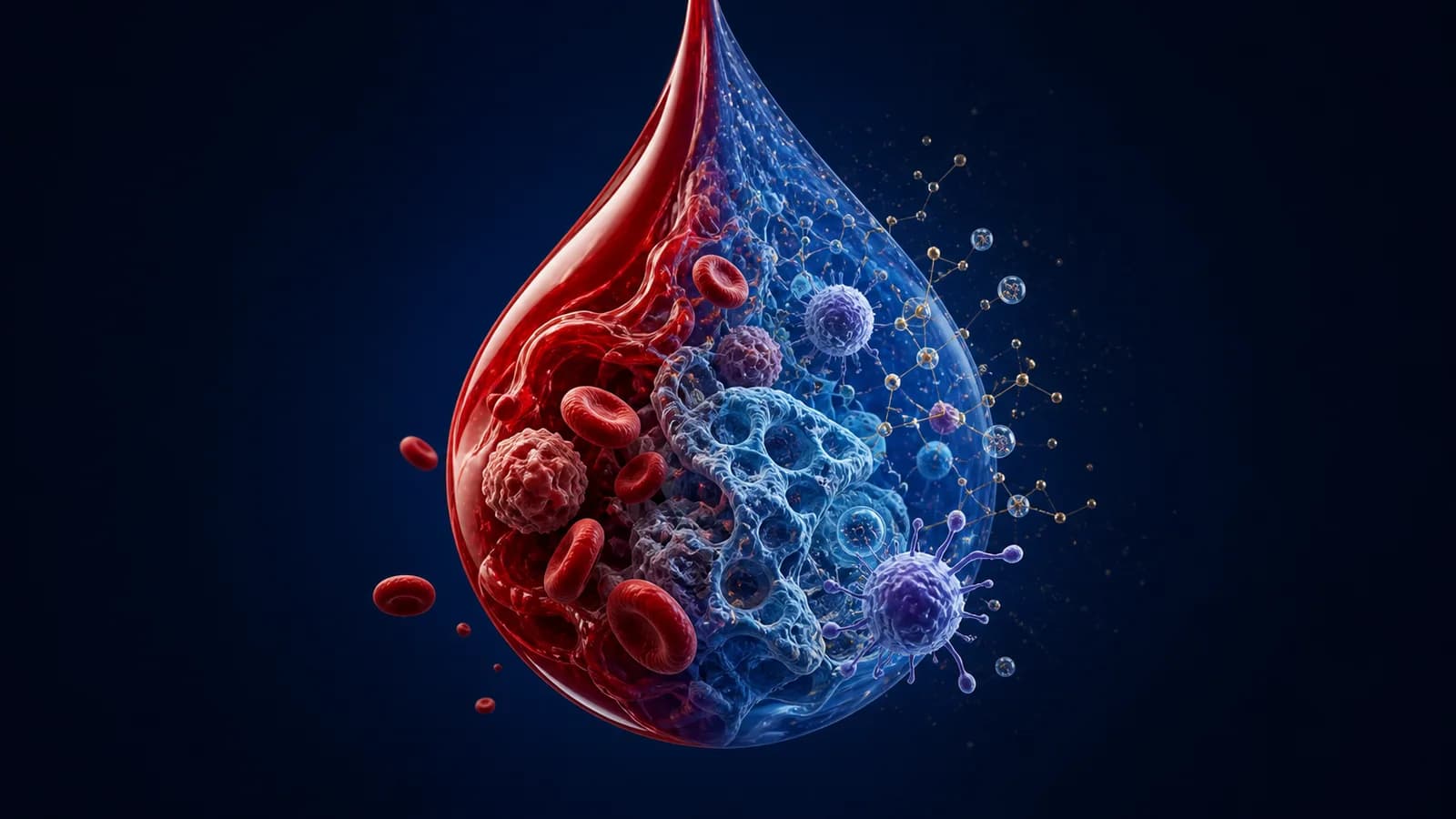
Most people think of menstrual blood in one simple way: as something the body is getting rid of.
That view is understandable. It is part of a normal menstrual cycle, and in everyday life it is usually treated as waste. But from a scientific point of view, that description is too simple. Menstrual blood is not just blood leaving the body. It is a mixed biological sample that contains material from the uterine lining, along with blood cells, immune cells, proteins, signaling molecules, nucleic acids, and other biologically active components.
That is why researchers have become interested in it.
The central question is not whether menstrual blood is “magical,” and it is not whether it is already a proven therapy. The real question is much more useful: what is menstrual blood made of, and why does that matter scientifically?
Why this matters
Scientists are often limited by one basic problem: getting the right sample from the right tissue at the right time.
The uterus is not easy to sample again and again in a non-invasive way. Menstrual blood changes that. It is naturally produced, can be collected without surgery, and comes directly from tissue involved in one of the most remarkable repair cycles in the human body: the endometrium builds, sheds, and repairs itself over and over again.
That makes menstrual blood interesting for two big reasons.
First, it may contain cells and signals that help scientists understand tissue repair and regenerative biology. Second, it may act as a recurring diagnostic sample, giving researchers clues about what is happening inside the uterus and reproductive tract.
Menstrual blood is not just blood
The word “blood” can be misleading.
Venous blood, the kind taken from your arm, mostly reflects what is circulating through the body. Menstrual blood is different. It is a mixture created during the shedding of the uterine lining. According to a 2025 review in Frontiers in Cell and Developmental Biology, menstrual fluid contains endometrial tissue fragments, stromal and epithelial cells, immune cells, proteins, extracellular vesicles, metabolites and nucleic acids.
So when scientists study menstrual blood, they are not just looking at “blood.” They are studying a complex endometrial-derived biospecimen.
That matters because a sample that comes so close to the uterine lining may contain biological information that is harder to detect in standard blood tests.
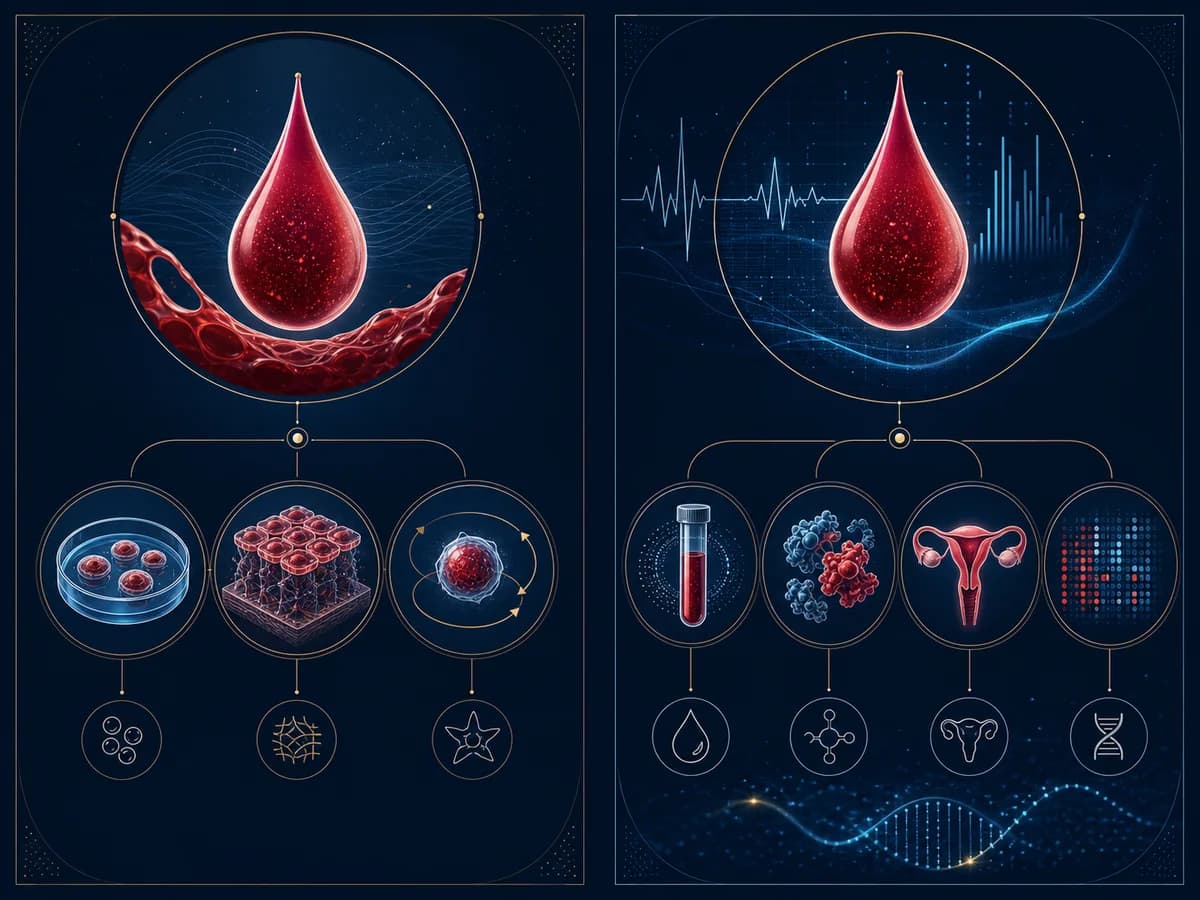
What menstrual blood actually contains
At a high level, menstrual blood can include:
- Blood cells, including red blood cells and immune cells
- Endometrial cells, shed from the uterine lining
- Tissue fragments, which may preserve local biological signals
- Proteins and cytokines, which help regulate inflammation and repair
- Extracellular vesicles, tiny packages cells use to send information
- DNA and RNA, which may help researchers detect disease-related patterns
- Stem-like stromal cell populations, often called menstrual blood-derived stem/stromal cells or MenSCs
This last group gets a lot of attention, but it is only one part of the story.
In fact, one of the most important scientific shifts in this field is that researchers are now thinking about menstrual blood in two ways at once: as a possible source of useful cells, and as a source of useful information.
Two research paths: medicine and information
A helpful way to understand the field is to split it into two tracks.
1. Menstrual blood as medicine
In this path, researchers isolate cells or cell-derived products and test whether they could support tissue repair, reduce inflammation, or help in regenerative medicine.
This is where the MenSC field sits.
The foundational paper is the well-known 2007 study by Meng and colleagues in the Journal of Translational Medicine, which described an expandable cell population isolated from menstrual blood. That paper helped launch the modern field.
2. Menstrual blood as information
In this path, researchers study menstrual samples to learn something about disease biology. Instead of asking, “Can these cells treat something?” they ask, “Can this sample help us detect or understand something?”
That is where work on endometriosis diagnostics, biomarker discovery and even organoid models becomes especially interesting.
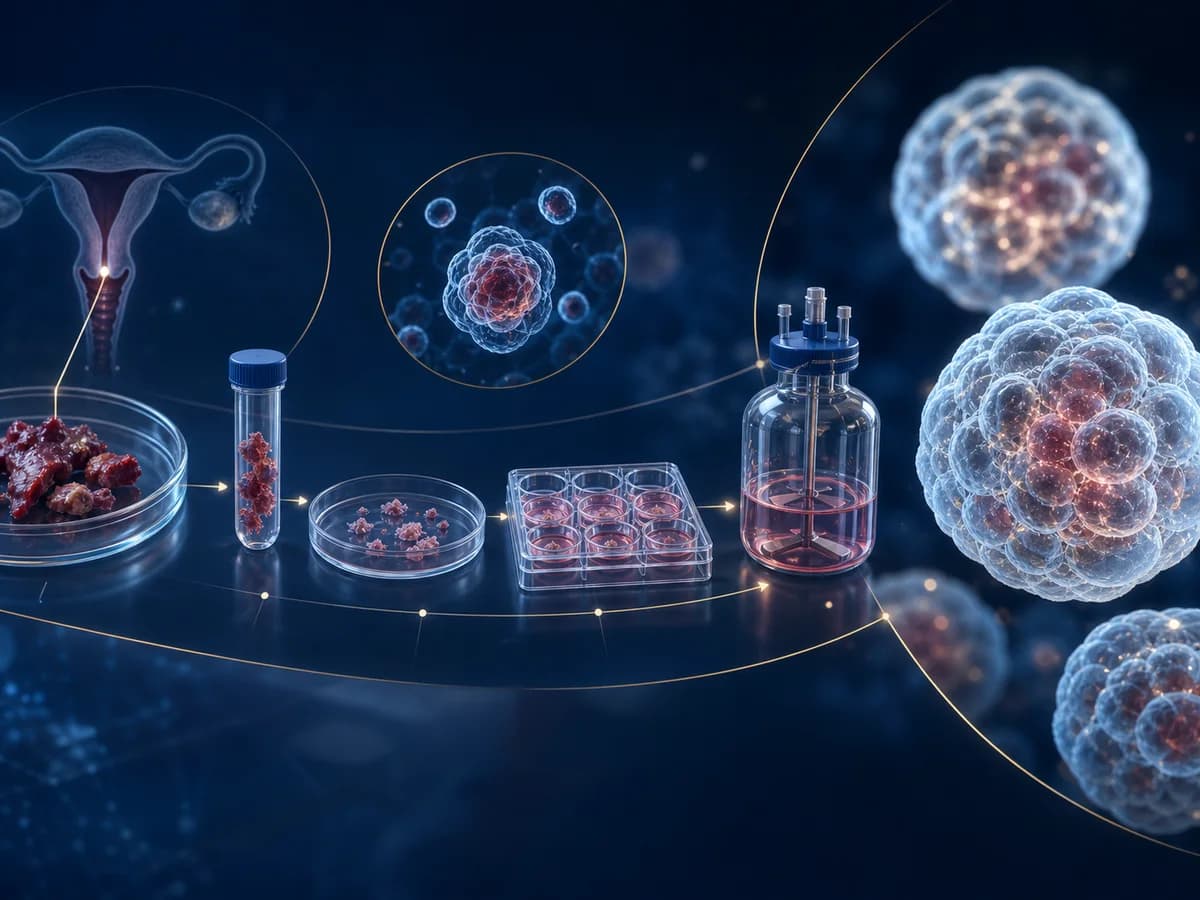
A good example is Cindrova-Davies et al. in Communications Biology, who showed that endometrial organoids could be derived from menstrual flow. That result helped strengthen the idea that menstrual flow can carry biologically meaningful tissue material, not just debris.
What the research actually shows
Science Hero’s clearest editorial advantage is simple: separate what we know from what looks promising.
What We Know
Menstrual blood is a complex biological sample, not just a simpler version of venous blood.
Researchers can isolate adherent stromal cell populations from menstrual blood, and these are widely studied under labels such as MenSCs or menstrual blood-derived stromal/stem cells.
Researchers can also use menstrual samples for molecular analysis, biomarker work, and tissue-related models.
What Looks Promising
Menstrual blood may become a useful non-invasive source for studying reproductive disease, especially conditions connected to the endometrium.
Its repair-related biology may also help researchers understand how tissues heal and how cells communicate during inflammation and repair.
What We Still Don’t Know
We do not yet know which collection, processing or manufacturing approaches are best for each application.
We also do not know which biomarkers will remain reliable when tested in larger, more diverse human populations.
And most importantly, the existence of interesting biology does not mean menstrual blood has already become a proven clinical therapy.
One study or example worth knowing
One especially useful example is the 2021 Communications Biology paper on endometrial organoids from menstrual flow.
Why does it matter?
Because it showed that menstrual flow can contain recoverable gland fragments that researchers can use to build organoids. In simple terms, that means menstrual flow may preserve enough biological structure to help scientists study the endometrium without relying only on invasive biopsy procedures.
The limitation is important too: a successful research model is not the same as a validated clinical test. It proves scientific usefulness, not clinical readiness.
Why this field keeps growing
The field has grown because menstrual blood sits at the intersection of several strong scientific trends:
- regenerative biology
- reproductive health
- extracellular vesicle research
- immunology
- biomarker discovery
- non-invasive sampling
This does not mean all roads will lead to major breakthroughs. Some will not. But it does explain why the field keeps attracting attention.
Researchers are studying a sample that is recurring, non-invasive, biologically rich, and directly connected to a tissue that repairs itself every month. That combination is rare.
The balanced conclusion
So what is menstrual blood made of?
Scientifically, it is a mixed endometrial-derived sample containing blood components, endometrial cells, immune cells, proteins, signaling molecules, nucleic acids, extracellular vesicles and, in many studies, stem-like stromal cell populations.
That does not make it a proven miracle material.
But it does make it scientifically important.
The strongest conclusion today is not hype. It is clarity: menstrual blood is a meaningful biological sample, and researchers are using it to study both healing and information — meaning tissue repair on one side, and diagnostics on the other.
Research Summary
What is menstrual blood made of?
Menstrual blood is a mixed biological sample that contains blood cells, endometrial cells, tissue fragments, immune cells, proteins, extracellular vesicles, nucleic acids and other molecules.
Is menstrual blood the same as venous blood?
No. Menstrual blood contains endometrial-derived material and local biological signals that are not captured in the same way by standard blood draws.
Why are scientists studying menstrual blood?
Because it may help researchers study tissue repair, reproductive biology, and disease-related biomarkers in a non-invasive way.
Does menstrual blood contain stem-like cells?
Yes. Multiple studies describe menstrual blood-derived stromal/stem-like cell populations, often called MenSCs.
Is menstrual blood already a proven therapy?
No. Its biology is interesting and promising, but most therapeutic ideas remain experimental or early-stage.
Where can I explore the full research?
Science Hero’s Free Report provides the fast overview, and the Premium Report maps the deeper evidence landscape.