
Wellness Trends · Science Hero Editorial
What Is Bee Pollen? What Science Actually Shows
What is bee pollen? Explore its nutrients, the viral 94-nutrient claim, digestion, bioavailability and what scientific research actually shows.
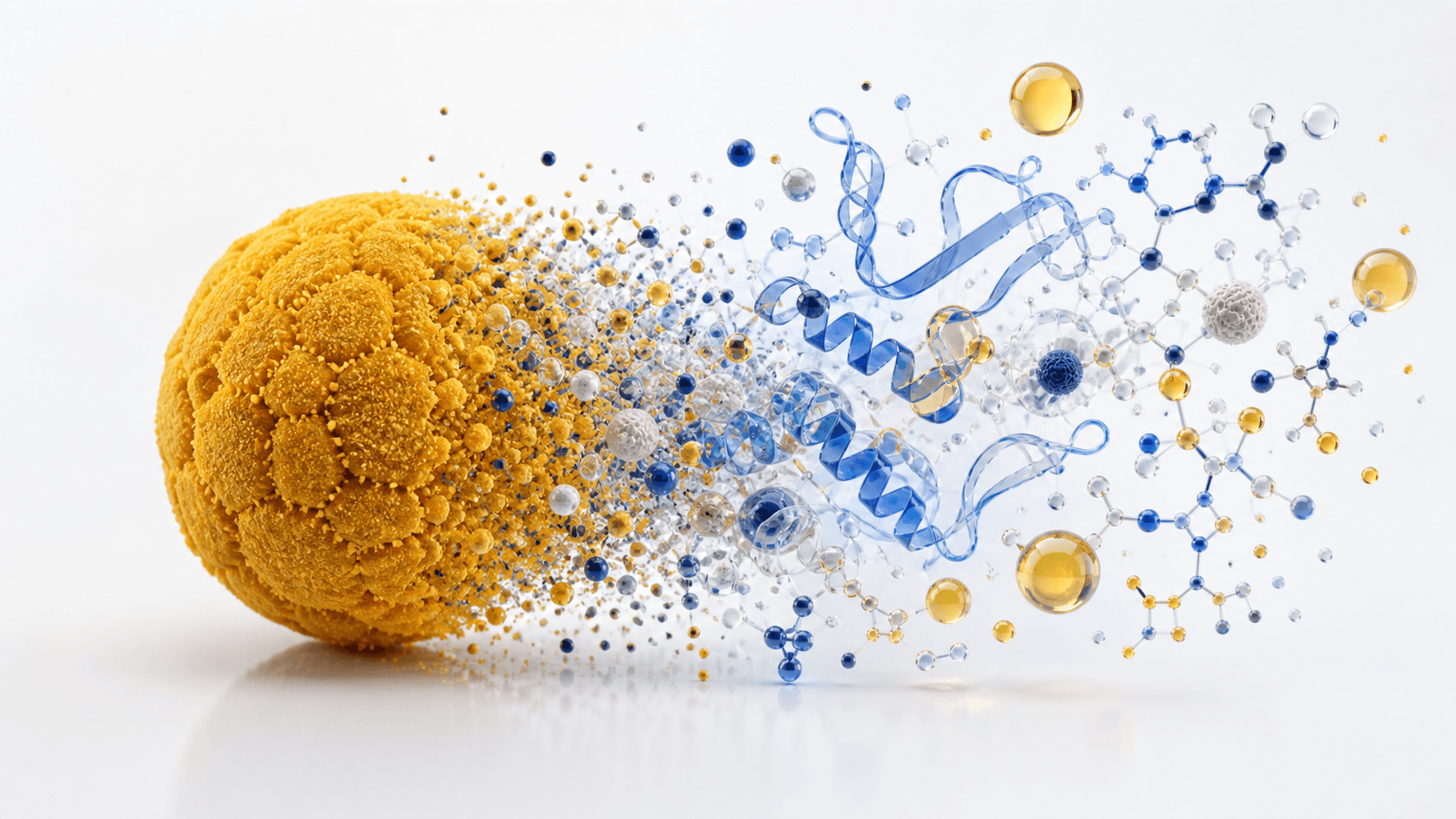
Bee pollen has the perfect ingredients for a wellness phenomenon.
It is natural. It comes from bees. It contains protein, minerals, vitamins and plant compounds. It appears in brightly coloured granules that look unmistakably biological. And online, it has been described as everything from a concentrated superfood to a source of dozens of essential nutrients.
One widely shared claim goes further: bee pollen supposedly contains 94 essential nutrients humans need every day.
The problem is that a food can be chemically interesting without being nutritionally complete. A substance can contain a mineral without providing much of it. And laboratory analysis can detect compounds that human digestion may only partially release.
That makes bee pollen more interesting scientifically than either its enthusiasts or its sceptics often suggest.
The first question is surprisingly basic:
What exactly is bee pollen?
Bee pollen starts with plants, not bees
The pollen itself is produced by flowering plants.
Honeybees collect microscopic pollen grains from flowers, moisten them with nectar and salivary secretions, compact them into pellets and transport them on structures on their hind legs known as corbiculae — the familiar “pollen baskets.”
Commercial bee pollen is usually collected as bees return to the hive.
That means the product in a jar is not a single chemically defined ingredient. It is a mixture shaped by:
- plant species,
- geography,
- season,
- weather,
- bee foraging behaviour,
- collection method,
- drying,
- storage,
- grinding,
- fermentation,
- and other processing.
A major 2020 review by Thakur and Nanda integrated more than 100 studies from over 20 countries and documented just how variable bee-pollen composition can be.
That variability is one of the most important facts in the entire field.
A rapeseed-dominant pollen product is not chemically identical to one dominated by chestnut, willow, maize or mixed meadow flowers.
In other words:
“Bee pollen” is a product category, not one reproducible substance.
What is actually inside bee pollen?
Across the literature, researchers repeatedly identify a broad nutritional matrix containing:
- carbohydrates,
- proteins,
- amino acids,
- lipids,
- fibre,
- minerals,
- selected vitamins,
- carotenoids,
- phenolic acids,
- flavonoids,
- phytosterols,
- and other phytochemicals.
The Thakur and Nanda review reported cross-study mean values of approximately:
- 54.2% carbohydrate
- 21.3% protein
- 8.8% fibre
- 5.3% lipid
Those averages are useful for understanding the category.
They are not a nutrition label for every jar.
A 2015 analysis of bee pollen from southern Brazil showed that botanical origin could materially influence macronutrients, antioxidant vitamins, phenolics and the nutritional potential of individual samples.
This is why statements such as “bee pollen contains vitamin X” require a second question:
Which bee pollen?
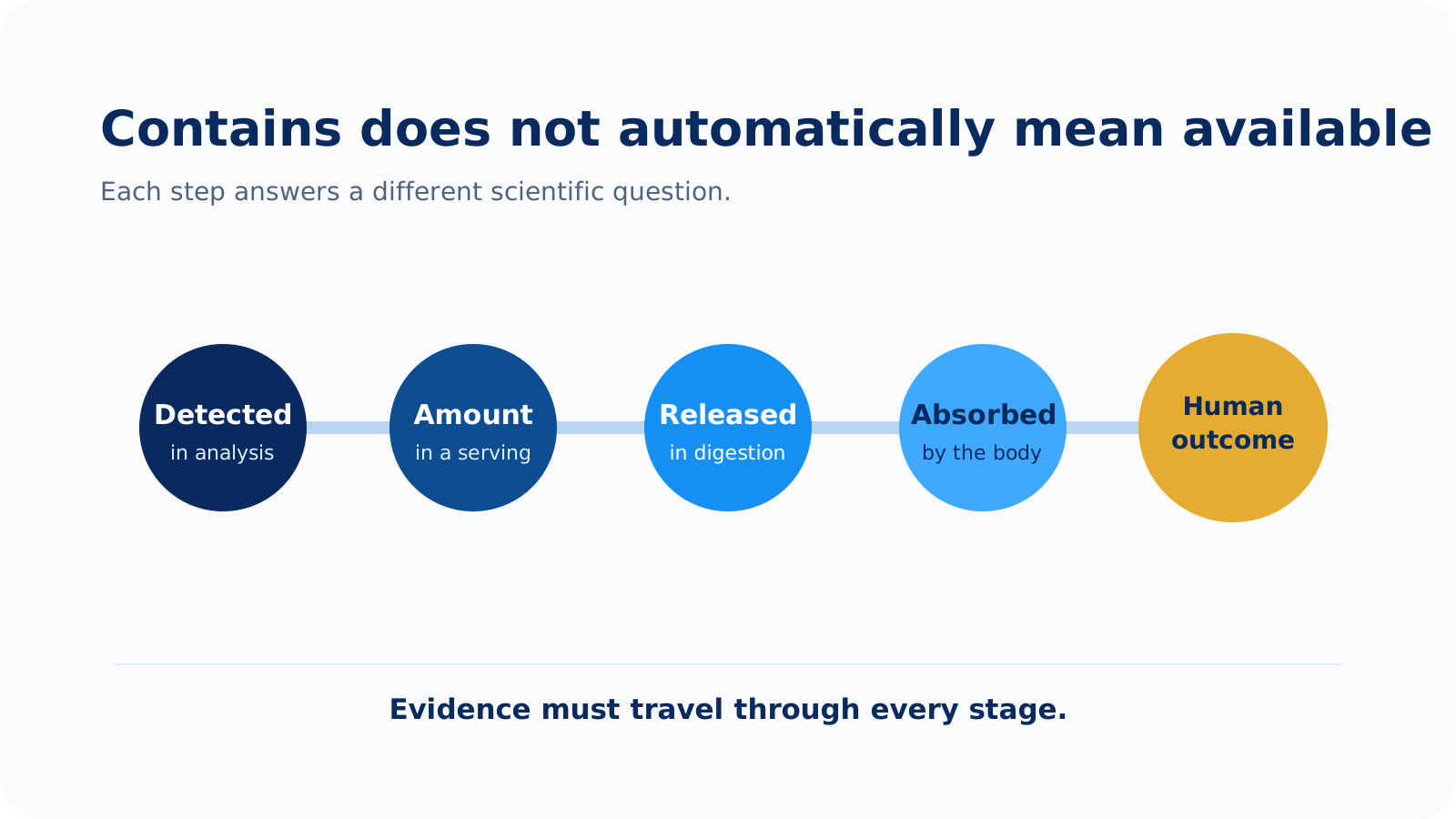
The “94 essential nutrients” problem
The viral number 94 sounds scientific because it is precise.
But precision is not the same as validity.
The Science Hero evidence review found no recognised nutrition framework identifying 94 essential vitamins and minerals, and no analytical study in the reviewed literature demonstrating that bee pollen contains such a defined set.
The confusion may come partly from a different claim: reviews sometimes describe more than 250 compounds across numerous chemical categories.
But compounds, nutrients, vitamins, minerals and chemical elements are not interchangeable categories.
A flavonoid is a compound. Iron is an element and essential mineral. A fatty acid may be nutritionally relevant. A volatile molecule may be chemically detectable but have no established daily requirement.
Counting all of them together can create an impressive number without answering the nutritional question.
The important question is not:
How many things can a laboratory detect?
It is:
How much of nutritionally important compounds does a realistic serving provide?
Presence is only the beginning
Minerals provide one of the clearest examples.
A 2023 study analysing 71 bee-pollen samples identified phosphorus and potassium among the predominant measured elements and showed that mineral profiles differed with botanical origin and harvesting period.
That establishes composition.
It does not establish delivery.
In 2025, Mutlu, Aylanc and Vilas-Boas took the question further by studying mineral content before and after simulated gastrointestinal digestion.
Their bioaccessibility study modelled a relatively large intake of 40 grams per day.
Even at that amount, the estimated contributions to recommended intake were modest for many minerals:
- manganese contributed the most,
- potassium, magnesium and copper were roughly in a 6–10% range,
- iron and zinc were below 5%,
- calcium was below 1%.
This does not mean bee pollen contains no useful minerals.
It demonstrates something more important:
A mineral appearing on an analytical list does not mean a normal serving supplies a major portion of daily human requirements.
The free Science Hero report follows the viral 94-nutrient claim through composition, serving size, digestion, fertility and human evidence.
The pollen wall creates another complication
Pollen grains evolved to survive environmental transport.
Their outer wall contains sporopollenin, an unusually resistant natural polymer.
That is biologically useful for plants.
It creates a nutritional problem for humans.
A laboratory can grind, extract or chemically disrupt pollen until internal compounds become measurable.
Human digestion may release less.
Researchers are therefore investigating:
- grinding,
- ultrasonication,
- high-shear processing,
- enzymatic treatment,
- fermentation,
- and other wall-disruption methods.
A 2019 wall-disruption study reported improved nutrient release after ultrasonication and high-shear treatment.
A later review described selected processing approaches that increased measured nutrient release and, under particular experimental conditions, improved in-vitro protein digestibility.
But once again, there is a translation gap.
Improved release in a laboratory does not automatically mean improved nutritional status or health outcomes in humans.
Bee pollen, bee bread and pollen extracts are not the same thing
Another source of confusion is terminology.
Three categories often get blended together online:
Bee-collected pollen The granules collected from returning bees and sold as food or supplements.
Bee bread Pollen stored and biochemically transformed inside the hive.
Standardised flower-pollen extracts Manufactured fractions produced from selected plant pollens and designed for controlled clinical use.
This distinction matters enormously.
Some of the strongest human evidence in the broader pollen literature comes from standardised extracts studied for urological symptoms, menopause-related symptoms and urinary conditions.
That is scientifically interesting.
It does not mean that eating a spoonful of heterogeneous bee-pollen granules produces the same exposure.
The analogy is similar to coffee and purified caffeine.
A trial of caffeine can teach us something relevant about coffee, but it does not prove that every cup contains the same dose or produces the same effect.
What the research actually shows
What We Know
Bee pollen is chemically and nutritionally diverse.
It commonly contains substantial carbohydrate and protein, a smaller lipid fraction, selected minerals, vitamins and numerous phytochemicals.
Its composition varies substantially with botanical origin, geography, season and processing.
What Looks Promising
Research into digestion, wall disruption and standardisation may make it easier to understand which pollen-derived preparations actually deliver reproducible compounds.
Defined extracts have already progressed further into controlled human research than ordinary raw pollen.
What We Still Don’t Know
There is insufficient controlled human evidence showing that routine consumption of ordinary bee pollen:
- prevents nutrient deficiency,
- improves long-term health,
- increases energy,
- enhances immunity,
- improves fertility,
- or extends healthy lifespan.
The product category is simply too heterogeneous and the human evidence too limited to make those claims broadly.
Why bee pollen remains worth studying
The most interesting conclusion is not that bee pollen is a miracle food.
Nor is it that the entire subject is hype.
Bee pollen sits at the intersection of nutrition, plant chemistry, digestion, food technology and human biology.
Its complexity is real.
The challenge is learning how much of that complexity translates into meaningful human outcomes.
That requires moving through a sequence:
detected → present in a useful amount → released during digestion → absorbed → biologically active → clinically meaningful
Much of the existing literature establishes the first few steps.
Far fewer studies reach the last.
The Science Hero Premium Report Bee Pollen: Nature’s Nutrient Powerhouse? maps the complete evidence landscape across nutrition, bioaccessibility, fertility, human clinical research, safety, researchers, institutions and original sources.
Research Summary
What is bee pollen?
Bee pollen consists of plant pollen collected and compacted by honeybees. Its final composition depends strongly on botanical origin, geography, season and processing.
What nutrients does bee pollen contain?
Research identifies carbohydrates, protein, amino acids, lipids, fibre, minerals, selected vitamins and numerous phytochemicals. Concentrations vary considerably between products.
Does bee pollen contain 94 essential nutrients?
The Science Hero review identified no scientific or recognised nutritional basis for the specific claim that bee pollen contains 94 essential nutrients humans need every day.
Is everything detected in bee pollen absorbed?
No. Chemical detection, digestive release, absorption and clinical usefulness are separate stages.
Is bee pollen a proven superfood?
“Superfood” is not a scientific category. Bee pollen is chemically rich, but broad human-health benefits from routine raw-pollen consumption remain insufficiently established.
Original scientific sources
- Thakur & Nanda 2020 — Composition and functionality of bee pollen
- Sattler et al. 2015 — Origin, bioactive compounds and nutritional composition
- Valverde et al. 2023 — Mineral composition, botanical origin and harvest period
- Wu et al. 2019 — Wall disruption and nutrient release
- Mutlu, Aylanc & Vilas-Boas 2025 — Mineral bioaccessibility